





 Send Inquiry
Wire Conveyor Belts
MOQ : 50 Pieces
Wire Conveyor Belts Specification
- Surface Treatment
- Other
- Aperture
- 2 mm to 30 mm
- Hole Shape
- Rectangular & Square
- Length
- As per requirement (customizable)
- Wire Gauge
- Available from 1 mm to 10 mm
- Product Type
- Wire Mesh
- Mesh Type
- Steel Wire Mesh
- Mesh Style
- Woven / Plain Weave
- Material
- Steel
- Alloy
- SS304, SS316, GI, MS
- Application
- Other
- Dimensions
- Customized, standard widths from 300 mm to 3000 mm
- Wire Diameter
- 1-3mm Millimeter (mm)
- Weight
- As per size & wire gauge
- Color
- Silver
- Belt Edge Options
- Welded, Chain Link, Ladder Edge
- Open Area Percentage
- 20% - 85% depending on mesh
- Operating Temperature
- -40C to 1200C
- Flexibility
- High lateral flexibility
- Load Capacity
- Up to 1000 kg/m2 depending on type
- Conveyor Type Compatibility
- Straight run, curved, Z conveyors
- Corrosion Resistance
- Strong, especially in SS grades
- Belt Pitch
- 5 mm - 50 mm
- Tensile Strength
- Custom, based on material and gauge
Wire Conveyor Belts Trade Information
- Minimum Order Quantity
- 50 Pieces
- Supply Ability
- 5000 Pieces Per Month
- Delivery Time
- 7-10 Days
Wire Conveyor Belts About
We manufacture a wide range of Wire Conveyor Belts using premium-quality materials such as mild steel, stainless steel, and spring steel. These belts offer a cost-effective alternative to other types of metal conveyor belts. They are extensively used in food processing, lifting equipment, brazing operations, and various material handling applications. Designed specifically for transporting small items or products with delicate or polished surfaces, these belts prevent damage or marking that could occur with more open mesh designs.
Available as:
- Plain chain link belts
- Rod reinforced chain link belts
- Duplex belts
Specifications:
- Wire size- 1mm to 6 mm
- Wire Diameter: 1-3mm
- Material- stainless steel, mild steel, spring steel
Features:
- Less expensive
- Simple structure
- Excellent tendency to stretch and narrow
- Capable of carrying light, medium and heavy load
- Dense smooth carrying surface
- High strength
Applications:
- Forging industry
- Food processing industry
- Dairy industry
- Bottling plant
- Engineering industry
- Oil industry
Used for:
- Brazing in furnace
- Bottle washing
- Fireplace curtains
- Cooling, & heat treatment
- Baking
Versatile Design for Diverse Applications
Our wire conveyor belts are crafted to adapt to multiple industrial processes, offering high lateral flexibility and a broad compatibility with straight, curved, and Z-type conveyors. With mesh types ranging from woven to plain weave and an open area percentage of 20% to 85%, these belts are suited for food processing, drying, chemical, and heat treatment applications. Their robust build ensures reliable performance under various operating conditions.
Durable Construction and Customization
Manufactured using high-grade steel alloys such as SS304, SS316, GI, and MS, the belts come with strong corrosion resistance and can handle extreme temperatures from -40C to 1200C. Select from welded, chain link, or ladder edge options, and customize specifications like wire diameter (1-3mm), belt pitch (5-50mm), surface treatments, and dimensions from 300mm up to 3000mm wide. Each belt is designed to meet exact load and tensile requirements.
FAQ's of Wire Conveyor Belts:
Q: How do I select the appropriate edge type for my wire conveyor belt?
A: The choice between welded, chain link, and ladder edges depends on your application's operating environment and tension requirements. Welded edges offer strength and prevent snagging, chain link edges add flexibility for curves, while ladder edges suit light, straight-running applications.Q: What temperature range can these wire conveyor belts safely operate within?
A: Our wire conveyor belts are engineered to function reliably from -40C up to 1200C, making them suitable for processes with extreme heating or cooling requirements, including heat treatment and rapid freezing.Q: When should I choose a specific wire gauge or mesh aperture size?
A: Wire gauge and aperture size are determined by the nature of the material being conveyed and desired open area. Thicker wires and smaller apertures support heavier loads, while finer gauges and larger apertures ensure better airflow or drainage-ideal for drying or washing applications.Q: Where can these wire conveyor belts be used within industrial processes?
A: They are widely used in food processing, heat treatment, drying, packaging, sorting, and chemical industries. Their adaptable design allows them to be installed in straight, curved, or Z-type conveying systems, seamlessly integrating into most production lines.Q: What is the process for customizing conveyor belt dimensions and specifications?
A: Simply provide us with your required belt width, length, pitch, wire diameter, and preferred surface treatment. As manufacturers and exporters, we tailor every belt to your specifications while ensuring compliance with industry standards and plant requirements.Q: How does the corrosion resistance benefit my operations?
A: Constructed from stainless steel grades like SS304 and SS316, these belts resist rust and chemical degradation, resulting in extended service life with minimal maintenance-even in harsh environments such as food processing or chemical plants.Q: What are the advantages of high lateral flexibility in wire conveyor belts?
A: High lateral flexibility allows the belt to navigate curves and transitions smoothly, facilitating layouts with bends or Z-configurations. This flexibility optimizes plant space utilization and simplifies integration into existing conveyor systems.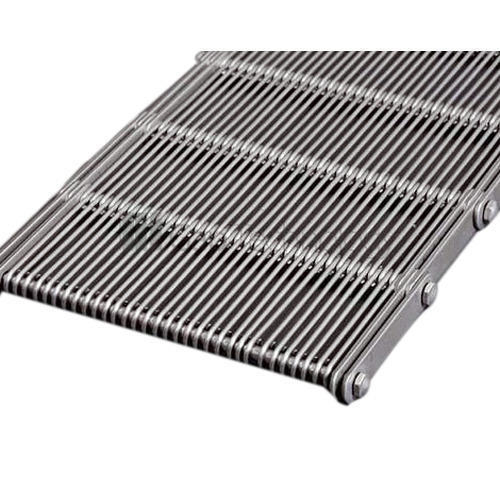
Tell us about your requirement

Price:
Quantity
Select Unit
- 50
- 100
- 200
- 250
- 500
- 1000+
Additional detail
Mobile number
Email

More Products in Conveyor Belt Category
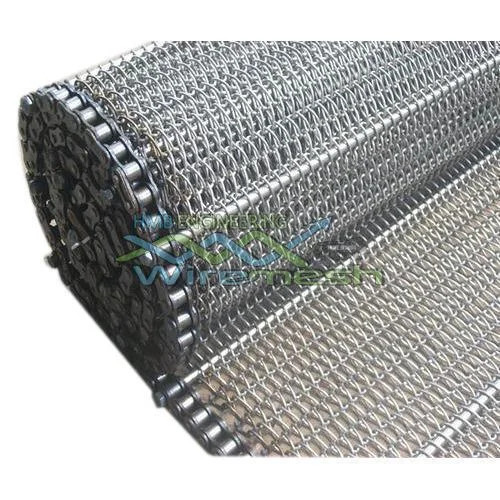
Stainless Steel Balance Conveyor Belt
Minimum Order Quantity : 100 Kilograms
Length : Customizable
Mesh Style : Other , Woven
Hole Shape : Other , Rectangular
Material : Stainless Steel
Color : Metallic Silver
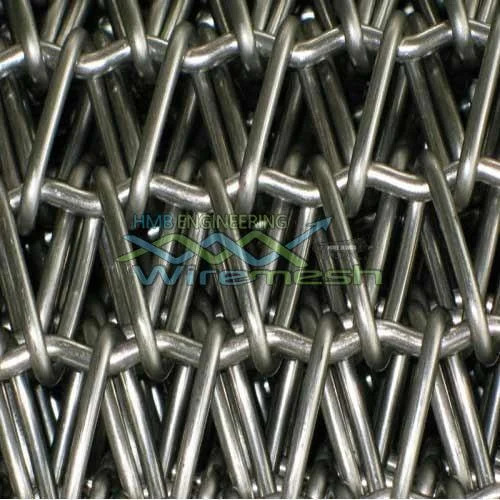
Food Grade Enrober Conveyor Belt
Minimum Order Quantity : 100 Kilograms
Length : Custom lengths available
Mesh Style : Other , Woven
Hole Shape : Other , Rectangular
Material : Other, Stainless Steel (food grade)
Color : Metallic silver
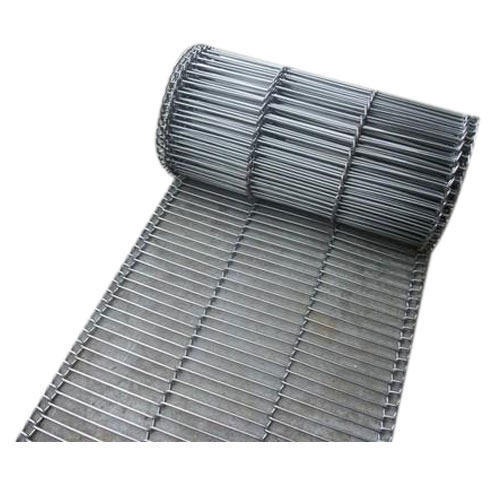
Flattend Wire Conveyor Belt
Minimum Order Quantity : 50 Pieces
Length : As per requirement / Customizable
Mesh Style : Other , Flat Wire Mesh
Hole Shape : Other , Rectangular
Material : Steel
Color : Silver
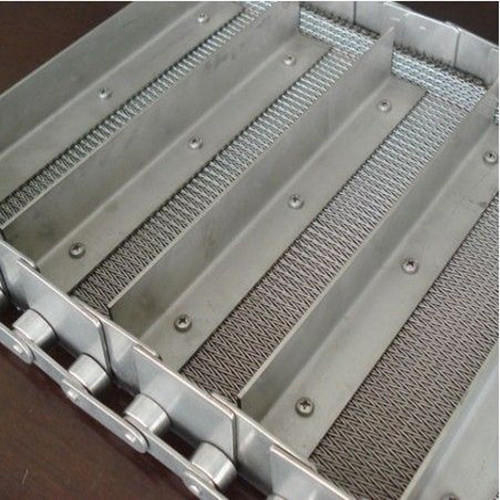
Stainless Steel Conveyor Belt With Baffle
Minimum Order Quantity : 50 Pieces
Length : Standard and customized lengths available
Mesh Style : Other , Belt Mesh with Baffle
Hole Shape : Other , Rectangular or square slots
Material : Stainless Steel
Color : Silver

Address
- A 7/89, South Side G.T. Road, Industrial Area,Ghaziabad - 201009, Uttar Pradesh, India
- Phone :08045476758
- hmbmesh@gmail.com
 Send Inquiry
Video
 |
HMB ENGINEERING
All Rights Reserved.(Terms of Use) Developed and Managed by Infocom Network Private Limited. |
